
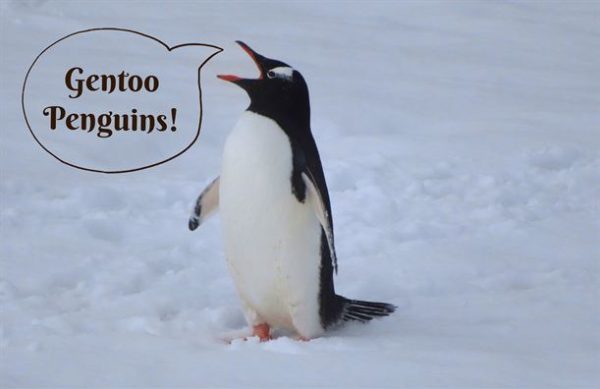

The might gentoo penguin is the most common type of penguin found on Anvers Island, Antarctica. There are three common types of penguins found here – Gentoo, Adelie, and Chinstrap penguins. These three species are collectively known as brushtail penguins. This name is in reference to their stiff brush like tail which helps them keep balance on land and works as a little rudder in the water!
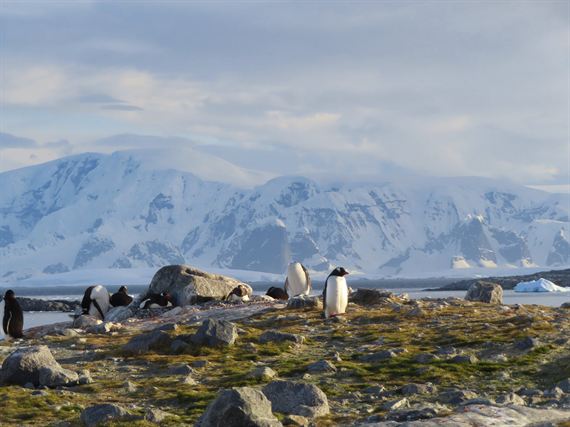
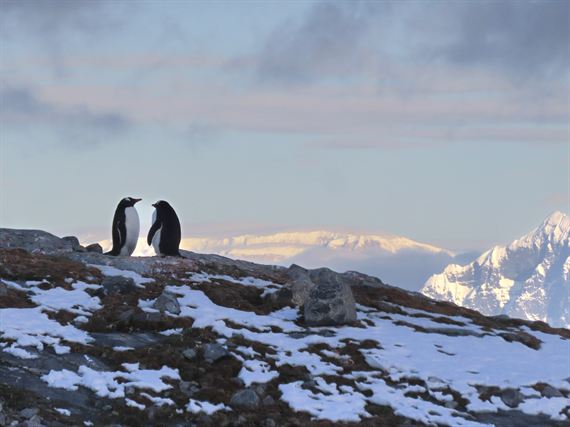
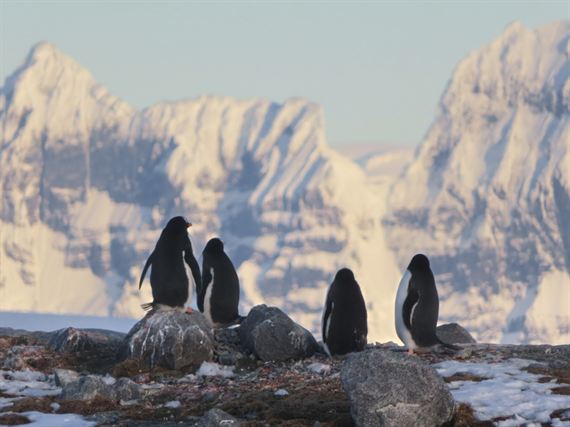
Gentoos are super curious creatures that nest in groups. We are just a quick 3 mile hike away from the nearest colony which we are super lucky to have a spot to view them from a safe distance while avoiding human/wildlife interaction. Watching them interact in their everyday life has been a major highlight in my time working here in Antarctica.
These penguins are extremely graceful in the water but on land, they waddle around like a cute unbalanced toddler – often stumbling and catching themselves on their belly and then looking around like did anyone see that? Oh, well I meant to do that. I could (and I have) watch them for hours on end.
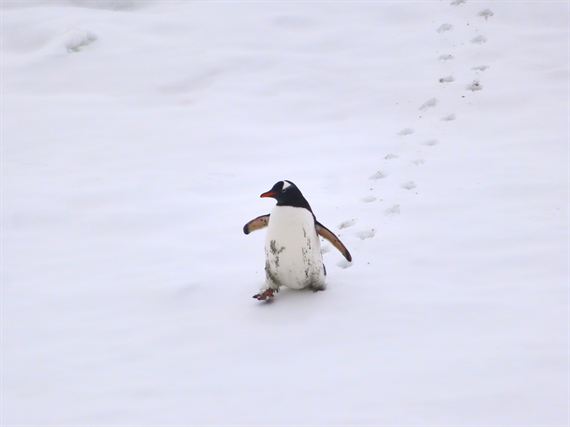
So you might be asking yourself, how do you recognize one penguin type from the others? Well, it took me a little while but once you know what to look for you can spot them from a mile away!
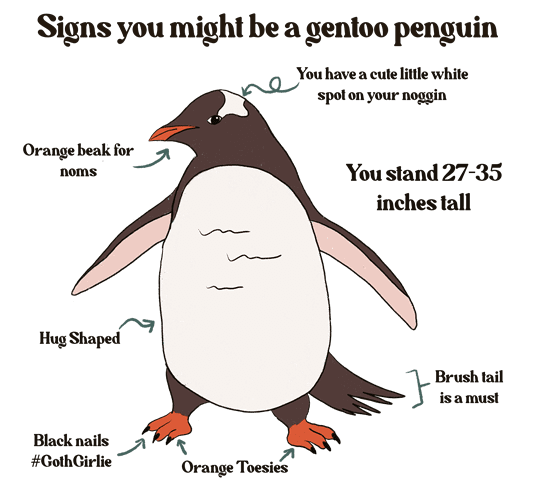
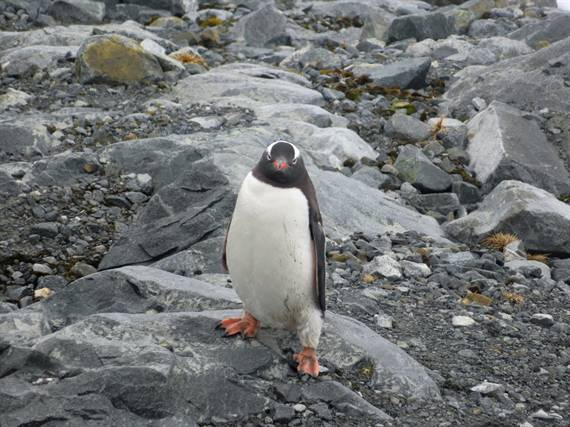
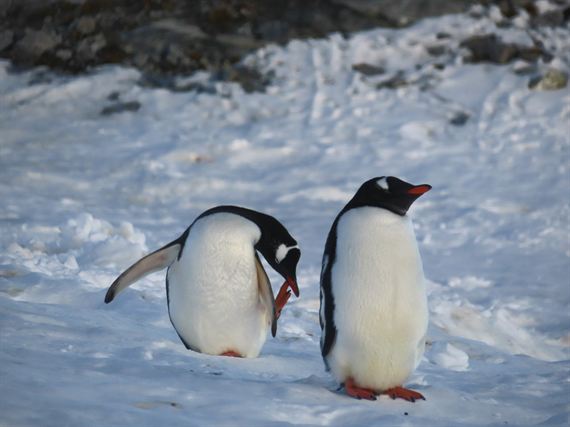
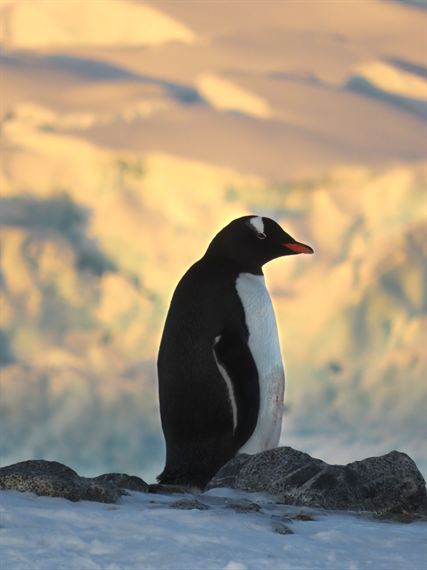
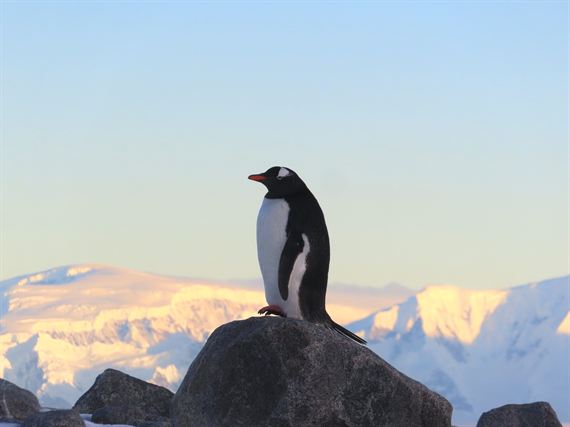
The main Gentoo features are that they have orange beaks and feet, black toe nails, a white patch of feathers by their eyes, and pink undersides of the flippers. Gentoos are also the largest of the three but not by much – only about 5-10 inches taller than the other two types of penguins. See the diagram below for helpful hints!
Gentoos build their nests rocky terrain by the water where they avoid snow and ice. Nests are usually made from hoarded piles of stone. They are pretty territorial of these stones which tends to lead to drama when another penguin tries to steal a cool one from them. But for the most part, they are super social while nesting.
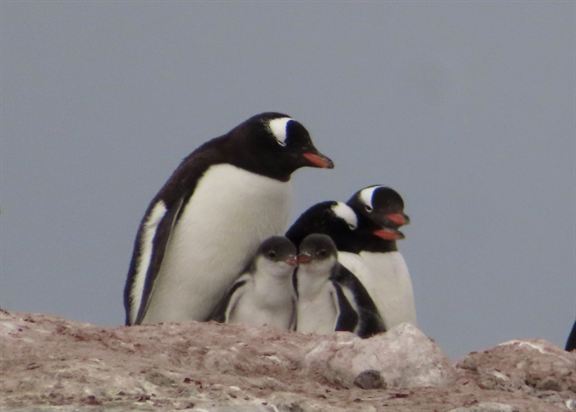
They lay two eggs each season and the parents share the incubation period which takes about 35 days to hatch. The chicks then remain in the nests 30 days before joining other chicks in the colony.
These chicks are born with soft downy feathers which are adorable but the big downside is that they are not waterproof yet. This makes them super fragile at this young age and eventually they will go through a molting period before they can go out to sea which is about 90 days after birth. I hear that watching the group of chicks attempt to swim for the first time is freaking adorable so I’m hopeful to catch a glimpse of that when the time comes.
I really love when you catch a gentoo doing something a bit wacky. Like squawking out to each other, beak up, flippers out. Or when you catch them looking dead at you. Like the one below! He looks so angry to be in my general presence. Like I am decently far away using a zoom lens but the sass in his face says it all! In reality, he probably isn’t judging me up and down but I think I will treasure this shot for a very long time!
Sir-Grumps-A-Lot:
Some Additional Fun Facts about Gentoos:
- Gentoos can be found on the Antarctic Peninsula, Subantarctic islands, and several South Atlantic islands.
- Gentoos are the third largest penguin type, after the emperor and king penguin.
- Gentoos have the most prominent tail of all other penguin types – it sticks out behind them and sweeps side to side as they walk
- Gentoos can grow between 27-35 inches and weigh between 10-19 pounds.
- They are the world’s fastest underwater birds and can reach up to 22 mph while swimming!
- They lay two eggs during the austral summer and both are equally likely to survive!
- And live on average 15-20 years in the wild!
- They mate with the same penguin year after year!
[…] here in the northern peninsula of Antarctica with the two other brushtail penguin species – Gentoo and […]